The usual causes, in the order I'd check them, and what helps with each.
Last Updated: August 29, 2026 · Reviewed by Dr. Sarah Kim, RDN
I spent years assuming constipation was something that just happened to some people, like freckles. It isn't. There's nearly always a reason, and the reasons aren't mysterious. What is mysterious is why nobody walks you through them in order. So here they are, roughly in the order I'd check if a friend asked.
First, fiber. Not "are you eating vegetables" but actual grams. The target is somewhere around 25 for women and 38 for men, and the average American gets about 15. If you're at 15, nothing else on this page matters until you fix that, because your colon is being asked to move material that has no bulk and no water in it.
Second, water. Fiber without water makes things worse, not better. This is the mistake I made for about a year: I added a fiber supplement, felt more bloated than before, and quit. I was drinking maybe four glasses of water a day. The fiber had nothing to swell with.
Third, movement. Your colon has its own rhythm and it responds to yours. People who sit for nine hours are constipated more often than people who don't, and a twenty-minute walk after dinner does something no supplement does.
Fourth, and this is the one people skip: the urge. If you ignore the urge to go because you're in a meeting, or you don't like the bathroom at work, your body eventually stops sending the signal as clearly. Stool sits, dries out, and the next attempt is harder. It compounds.
Fifth, medication. Opioid painkillers, iron tablets, some antidepressants, some blood pressure drugs, antacids with aluminum. If you started a new medication and things slowed down within a couple of weeks, that's probably your answer, and your doctor should hear about it.
And then, underneath all of that, there's the bacterial side. The bacteria in your large intestine ferment fiber into short-chain fatty acids, and those acids are part of what tells the colon to contract. If the bacteria aren't fed, that signal weakens. This is the piece almost nobody talks about and it's the piece a prebiotic is aimed at.
If you need to go today, the honest answer is an osmotic laxative like polyethylene glycol, or a glycerin suppository. They work. They're for occasional use. If you find yourself using one more than a couple of times a month, you've drifted from "occasional" into "managing a chronic problem with a short-term tool," and that's worth stepping back from.
For the longer run, the things that work are the boring ones: enough fiber, enough water, some walking, going when your body asks. And, if your diet isn't going to get you to 25 or 30 grams (most people's won't), a fiber supplement that you'll actually take. That last clause is the whole game. I have a drawer with three half-used tubs of psyllium in it.
People treat these as competitors and they're not. A laxative is a rescue. It forces a result and changes nothing about why you were constipated. A prebiotic fiber is maintenance. It feeds the bacteria that keep the colon working, softens stool over days rather than hours, and if you stop it, the benefit fades over a week or two rather than overnight.
The trap with stimulant laxatives (senna, bisacodyl) is that the gut can adapt to them. People end up needing more for the same effect. Osmotic ones are gentler on that front. Prebiotic fiber has no dependency issue at all, because it isn't doing anything to your gut that food doesn't do.
Most constipation is boring. Some isn't, and I'd rather be blunt about it than polite. See a doctor, soon, if there's blood in your stool that isn't obviously from a hemorrhoid, if you've lost weight without trying, if the constipation came on suddenly in your fifties or later, if it alternates with diarrhea, if you have pain that wakes you up, or if it's been going on for three months and nothing on this page has moved it. Those can be nothing. They can also be the early sign of something very treatable if it's caught, and a fiber powder is the wrong response.
Something I didn't understand until I was well into it: constipation makes you anxious about constipation, and anxiety slows the gut. The nervous system that runs your colon is the same one that tightens up when you're stressed. So you worry about whether you'll go, the worry makes you less likely to go, and you worry more. Breaking it isn't about "relaxing," which is useless advice, but about routine. Same time each morning, after coffee or breakfast when the gut is naturally most active, a few unhurried minutes, no phone. Give the reflex a chance to fire at the same time every day and it usually does.
Helpful: beans and lentils, oats, prunes (they have sorbitol as well as fiber, which is why they work better than their fiber content suggests), kiwi fruit (there's actual trial evidence for two a day), pears, chia, ground flax, most vegetables, plenty of water. Unhelpful in quantity: white bread and rice, cheese, red meat, fried food, and alcohol, which dehydrates. None of this is exotic. The problem isn't knowing it, it's doing it every day.
In pregnancy, constipation is common because of hormones and iron supplements; fiber and water are the first line, and anything else should go through your midwife or doctor. In older adults, it's usually a mix of less movement, less thirst, and more medication, and the "ignoring the urge" problem gets worse if mobility makes the bathroom a trek. In kids, it's usually withholding, and it's a pediatrician question.
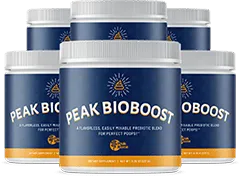
Where a product like Peak BioBoost fits into all this: it's a way of getting 8 grams of prebiotic fiber and a little magnesium into you every morning without tasting anything, which for most people is the difference between doing it and not. It doesn't replace the water, the walking or the doctor's visit if you need one. It's the fiber part, made easy.