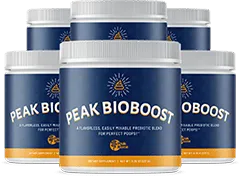
Five ingredients, every dose printed, and a look at what each one actually does.
Last Updated: August 29, 2026 · Reviewed by Dr. Sarah Kim, RDN
I'm going to go through the whole label, because most fiber supplement reviews just recite ingredient names and move on. There are only five things in this jar, and each one is there for a reason you can point to. The other thing worth saying up front: every dose is printed. The prebiotic blend is 8 grams, the magnesium is 40 mg, and there's no "proprietary complex" hiding the split.
Acacia gum is dried sap from the acacia tree, and people have been eating it for a very long time. It's a soluble fiber that ferments slowly in the colon, which is the key to why it's so well tolerated: slow fermentation means the bacteria produce gas gradually rather than all at once. It's also one of the better-studied fibers for feeding Bifidobacteria, and it has a modest effect on cholesterol and blood sugar as a bonus.
The reason it matters in a daily product is simple. Most fiber supplements cause gas because they dump one fast-fermenting fiber into your colon and the bacteria go wild. Acacia is the opposite: gentle, slow, and boring in the best possible way. If you've quit fiber before because of wind, this is the ingredient that makes Peak BioBoost different.
Fructooligosaccharides are short chains of fructose that your digestive enzymes can't break down. That's deliberate. They pass through the stomach and small intestine untouched and arrive in the colon as a meal for Bifidobacteria, which ferment them into short-chain fatty acids like butyrate, the fuel your colon cells run on.
At high doses FOS pulls water into the colon and acts as a mild laxative, which can mean urgency. Peak BioBoost keeps it at a level where it feeds bacteria without doing that. It's one of the four, not the whole scoop.
Inulin is the same fiber that makes garlic, onions, leeks and chicory good for your gut. Peak BioBoost sources it from Jerusalem artichoke. It's probably the most-researched prebiotic in existence, with a long list of trials showing it increases Bifidobacteria and improves stool frequency in people who are constipated.
In practice inulin does two things: it feeds bacteria and it softens stool. People who've been chronically constipated often notice the softening within a week, before the bacterial shift has really happened.
Xylooligosaccharides are the newest fiber in the mix and the most interesting. They change gut bacteria composition at doses of just a couple of grams, and there are human trials showing more Bifidobacteria and better stool frequency at amounts that would be laughably small for older prebiotics.
In this formula XOS is the precision instrument alongside three broader fibers. Each of the four feeds slightly different bacteria, so together they cover more of the colon's population than any one of them could.
Here's the ingredient that separates Peak BioBoost from a plain fiber tub. The four fibers deal with bacteria and stool consistency. They do nothing about the mechanical side: a gut wall that's too tense to let go. That's why some people take fiber for months and still can't go.
Magnesium citrate works on that. It relaxes the smooth muscle in the gut, draws a little water into the colon, and supports the nerve signalling that coordinates a bowel movement. At 40 mg it's nowhere near a laxative dose; it's there to take the edge off, not to force anything.
All five ingredients have long safety records. The only side effect most people get is some gas in the first two or three days, which is the bacteria adjusting and which starting on half a scoop mostly avoids. Two cautions: fiber can slow the absorption of some medications, so take them an hour before or two hours after; and if you have a diagnosed bowel condition, run it past your doctor first.
People ask why it's a powder. The answer is arithmetic. A capsule holds about half a gram. A useful dose of prebiotic fiber is several grams. To get 8 grams from capsules you'd be swallowing sixteen of them every morning, which nobody does for long. A scoop of flavorless powder in coffee is the only format that works for the amount that works.
The label says half a scoop for three days, then a full scoop. That isn't the company being cautious for the sake of it. Your gut bacteria need a few days to expand into the new food supply, and if you skip that step you'll get gas and blame the product.
If you're badly backed up, the label allows two scoops a day to start, dropping to one for maintenance once things are moving. Most people don't need that. Half, then one, is the normal path.
Five ingredients. Four jobs. One scoop. That's the formula, and starting on half a scoop is how you get through the first week comfortably.
I want to come back to magnesium, because it's the part of this formula that I think most people underrate. Nearly every fiber supplement works on a single idea: add bulk, stool gets bigger, gut pushes it out. That's fine if bulk is your problem. It does nothing if your gut is clenched.
The 40 mg dose is a choice. At 400 or 500 mg magnesium becomes an osmotic laxative, flooding the colon with water and creating urgency. That's useful in an emergency and miserable as a daily habit. At 40 mg you get muscle relaxation without the flood.
So the fibers handle biology and the magnesium handles mechanics. Five ingredients across the four common causes of constipation, rather than twenty ingredients across one.
No psyllium. No methylcellulose. No sweeteners, flavorings or colors. No senna, cascara, bisacodyl or polyethylene glycol. Nothing that stimulates the gut or that you could come to rely on.
The short list isn't a limitation, it's the design. Every ingredient has a job and a documented reason for being at the dose it's at.