One feeds the bacteria you have. The other adds new ones. For constipation, the first wins, and here's why.
Last Updated: August 29, 2026 · Reviewed by Dr. Sarah Kim, RDN
People use these two words as if they're interchangeable and they're nearly opposites. Probiotics are live bacteria you swallow. Prebiotics are the fiber that feeds the bacteria already in you. Both have their place. For constipation, one of them usually does more, and I'll say which and why.
You swallow a capsule of live Lactobacillus or Bifidobacterium. They have to survive stomach acid (some do), get past bile (some do), reach the colon, and then compete with the 38 trillion bacteria who already live there and are quite happy. Most don't set up permanent residence. What the survivors do is provide benefits while you keep taking them and mostly wash out when you stop. That's not nothing: specific strains have decent evidence for antibiotic-associated diarrhea, some IBS symptoms, and bloating. But it's a bit like flying in temporary staff to a business that mainly needs the existing staff to be fed.
You eat fiber your body can't digest. It reaches the colon intact. The bacteria already there, which are adapted to you and outnumber any supplement by orders of magnitude, ferment it and multiply. They produce the short-chain fatty acids that feed the colon wall and stimulate movement. Nothing has to survive stomach acid because nothing is alive; it's just food. And when you stop, the population shrinks back over a week or two rather than vanishing overnight.
Prebiotic fiber, and it's not close. Constipation is mostly a problem of dry, slow, under-bulked stool and an under-stimulated colon. Fiber holds water in the stool, adds bulk, and, if it's prebiotic, feeds the bacteria whose by-products tell the colon to contract. A probiotic addresses one piece of that (the bacteria) indirectly and does nothing for bulk or water. There are trials where probiotics helped constipation modestly. There are more, and stronger, trials for prebiotic fiber.
Yes, and if you're going to buy both, the pairing is sensible: the probiotic brings bacteria and the prebiotic feeds them. Some products bundle them and call it a synbiotic. I'd still say the prebiotic is the part doing the heavy lifting for regularity and the probiotic is the optional extra. If the budget stretches to one, buy the fiber.
Three reasons. Scale: you're feeding trillions of bacteria rather than adding a few billion. Adaptation: the bacteria you already have are the ones that suit you. And mechanism: fiber does the water-and-bulk job directly, which is most of what constipation needs, while a probiotic only works through the bacteria. It's the difference between fixing the diet and hiring a consultant.
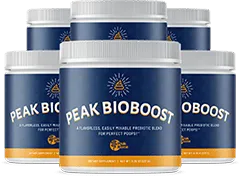
A decent probiotic runs $30 to $60 a month and the benefit stops when you do. A prebiotic fiber blend like Peak BioBoost is about $30 a month on the 6-jar pack, and the fiber also happens to be the thing your diet was probably short of anyway. Per dollar, feeding the bacteria you have is the better deal for most people. The exception is right after antibiotics, when the population has been knocked down and a probiotic can genuinely help it recover faster.
During and after a course of antibiotics. After a nasty stomach bug. For antibiotic-associated diarrhea, where the evidence is good. For some IBS symptoms, with specific strains your doctor or a good pharmacist can point you to. If a probiotic has visibly helped you before, keep it. Otherwise, start with the fiber.
Fiber first, from food as far as you can manage and from a supplement for the rest, started slowly with plenty of water. Give it a month. If regularity is sorted but you still have bloating or an unsettled gut, add a probiotic with a named strain for a couple of months and see whether it earns its place. If you've had antibiotics recently, flip the order. And if none of this moves anything in three months, or there are warning signs (blood, weight loss, pain), see a doctor rather than buying a third supplement.
Prebiotic fiber feeds your bacteria and fixes the water-and-bulk problem. Probiotics add bacteria and mostly leave when you stop. For constipation, buy the fiber. For antibiotic recovery, buy the probiotic. For both, buy both, and put the fiber in your coffee.